Composting is one of the most direct ways to reduce the weight and volume of household waste that goes to landfill. In Canada, composting options range from municipal green bin collection to backyard bins and indoor worm composters — and the right setup depends on where you live, your living arrangement, and how much kitchen waste your household generates.
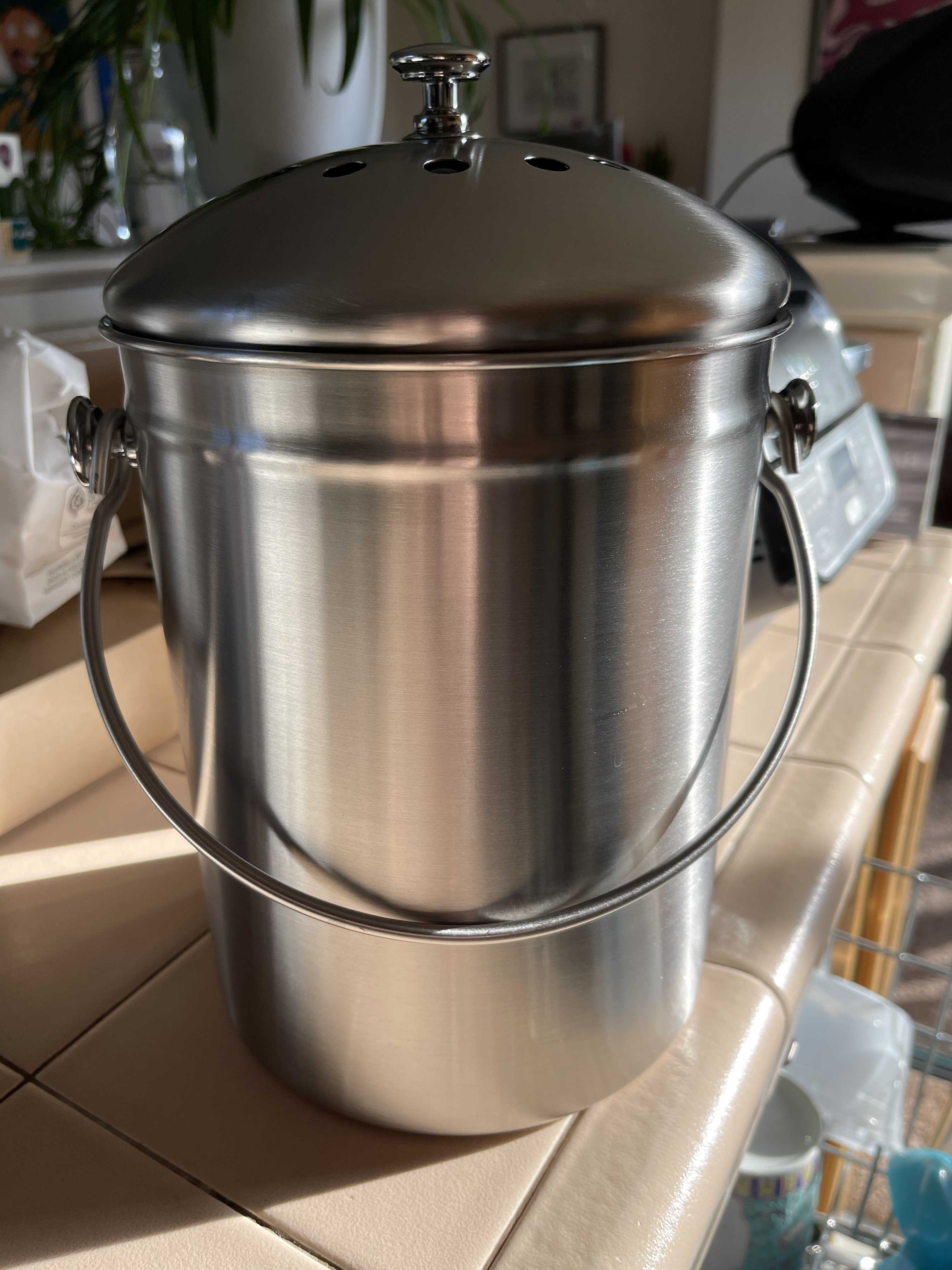
A kitchen compost bin collects food scraps before they are transferred to a larger outdoor bin or municipal collection. Source: Wikimedia Commons (CC BY-SA 3.0)
Municipal Green Bin Programs in Canada
Many Canadian municipalities operate green bin (organics) collection programs that accept food scraps, food-soiled paper, and garden waste. These programs divert organic material to industrial composting or anaerobic digestion facilities.
Coverage by Province
- Ontario — Most municipalities in the Greater Toronto Area, Ottawa, and Hamilton have weekly or bi-weekly green bin collection. Toronto's green bin program accepts meat, dairy, and cooked food in addition to raw produce scraps.
- British Columbia — Metro Vancouver's Food Scraps and Yard Trimmings collection is available across most member municipalities. Vancouver City also runs a yard trimmings program separately.
- Nova Scotia — Nova Scotia has operated a province-wide organics diversion program since the 1990s, one of the earliest in North America. Most municipalities have green cart collection.
- Quebec — Quebec introduced mandatory organics collection rules for municipalities, with a phased rollout requiring large municipalities to have programs in place by 2025. Coverage varies by region.
- Alberta, Saskatchewan, Manitoba — Municipal programs exist in Calgary, Edmonton, and Winnipeg, but rural areas often lack collection. Backyard composting is the primary option outside urban centres.
- Atlantic Canada (PEI, NB, NL) — Programs vary significantly by municipality; backyard composting is commonly used where collection is unavailable.
To find your specific program, search your municipality's name alongside "organics collection" or "green bin" on the municipal website. Rules differ: some programs do not accept meat or dairy, while others do.
What Goes In — and What Stays Out
Home compost bins (for garden use) and municipal green bin programs accept different materials. Mixing in the wrong items slows decomposition or creates odour and pest problems.
Generally Accepted in Home Compost Bins
- Raw fruit and vegetable scraps
- Coffee grounds and paper filters
- Tea bags (if paper-based; remove staples)
- Eggshells
- Dry leaves, grass clippings, and small garden trimmings
- Cardboard and paper (uncoated, torn into small pieces)
- Hair and nail clippings
Generally Avoided in Home Compost Bins
- Meat, fish, and bones (attract pests; fine in municipal facilities)
- Dairy products (same reason)
- Cooked food with oils or sauces
- Pet waste
- Diseased plant material
- Glossy or coated paper
The Government of Canada's composting guidance provides a baseline reference for what is compostable and how to manage a backyard bin. Municipal programs may accept additional materials beyond what home composting allows.
Backyard Composting: Setup and Maintenance
Backyard composting works with a bin, a pile, or a tumbler. The key variables are the ratio of carbon-rich materials (dry leaves, cardboard) to nitrogen-rich materials (food scraps, fresh grass), moisture level, and aeration.
The Carbon-to-Nitrogen Balance
A rough working ratio for most backyard bins is roughly 3:1 by volume — three parts dry, brown material for every one part green, wet material. Too much green (nitrogen) produces a wet, smelly pile; too much brown (carbon) slows decomposition significantly.
Aeration
Turning the compost pile every one to three weeks speeds up decomposition by introducing oxygen. A pitchfork or compost aerator tool works for open bins; tumblers are turned by rotating the drum. In Canadian winters, composting outdoors slows or stops — this is normal, and the pile will resume activity in spring.
Bin Options
- Open bin — simplest; can be built from wood pallets or wire mesh; suits large yards with regular garden waste
- Closed plastic bin — more pest-resistant; available from many municipalities at subsidized cost; suits smaller yards
- Tumbler — faster decomposition, pest-proof; higher upfront cost; available at Canadian Tire and garden centres
Several Canadian municipalities, including those in Ontario and British Columbia, offer subsidized backyard composters to residents. Check with your municipality before purchasing at full retail price.
Indoor Composting: Worm Bins
For apartment dwellers or households without outdoor space, a worm composter (vermicomposting bin) is a practical alternative. Red wigglers (Eisenia fetida) process food scraps into castings that function as a high-quality soil amendment.
A basic worm bin can be set up with a plastic storage bin, bedding material (shredded newspaper or cardboard), and a starter worm population. Worms are sold through gardening suppliers and some online retailers in Canada. The bin requires no special equipment and can be kept in a kitchen, under a sink, or in a basement.

A worm compost bin (vermicomposter) is suited to apartment composting. Source: Wikimedia Commons (CC BY-SA 3.0)
What Worms Can Process
- Fruit and vegetable scraps (avoid citrus in large quantities)
- Coffee grounds and tea leaves
- Shredded paper and cardboard (their bedding and food)
- Crushed eggshells (in moderation)
What to Avoid in Worm Bins
- Meat, dairy, and oily food
- Onions and garlic in large quantities
- Salty or spicy food
- Glossy paper
Using Compost
Finished compost — dark, crumbly, and earthy-smelling — can be used as a soil amendment for gardens, houseplants, and lawns. It improves soil structure, water retention, and microbial activity. It is not a fertilizer in the conventional sense, but it contributes to long-term soil health.
For Canadians without a garden, finished compost can often be donated to community gardens, offered through neighbourhood exchange groups, or contributed to municipal composting programs in some cities.
Related Reading
For other areas of household waste reduction, see How to Start Zero-Waste Grocery Shopping and Best Reusable Alternatives for Canadian Households.